
How Does Performance Marketing Help Businesses Grow?
Introduction
In today’s digital world, every business wants to reach more customers, increase sales, and grow its brand. But simply running advertisements or posting on social media does not always bring the expected results. Businesses need a marketing strategy that focuses on real growth and measurable outcomes. This is where Performance Marketing becomes important.
How Does Performance Marketing Help Businesses Grow? It helps businesses reach the right audience, generate quality leads, increase website traffic, and improve sales through platforms like Google Ads, Facebook, and Instagram. By using data-driven strategies and targeted advertising, businesses can understand what works best and continuously improve their marketing results. In simple words, performance marketing helps businesses make better use of their marketing budget and achieve measurable business growth.
1. Reaches the Right Audience
One of the biggest benefits of performance marketing is reaching people who are genuinely interested in your products or services.
With audience targeting, businesses can show their advertisements based on:
Age and gender
Location
Interests and behaviour
Online activities
Customer needs
How does it help?
Instead of showing advertisements to everyone, businesses can focus on potential customers who are more likely to make a purchase.
2. Generates Quality Leads
Getting more leads is important for business growth. Performance marketing helps businesses attract people who are interested in their products or services.
Using platforms like Google Ads and Meta Ads, businesses can create targeted campaigns that encourage people to:
Fill out enquiry forms
Send WhatsApp messages
Make phone calls
Visit websites
Request product or service details
How does it help?
It connects businesses with potential customers and creates more opportunities to increase sales.
3. Increases Sales and Conversions
The main goal of many marketing campaigns is to turn interested people into paying customers.
Performance marketing uses different strategies to encourage customers to take action, such as purchasing a product, booking a service, or signing up for an offer.
Some common strategies include:
Creating attractive advertisements
Using clear call-to-action buttons
Promoting special offers and discounts
Retargeting people who visited the website
Improving landing pages
How does it help?
These strategies make it easier for potential customers to take the next step and become actual customers.
4. Helps Control Marketing Budget
Traditional advertising can be expensive, and it is not always easy to measure the results. Performance marketing gives businesses better control over their advertising budgets.
Businesses can:
Set daily or monthly ad budgets
Choose how much to spend on campaigns
Stop advertisements that are not performing well
Invest more in successful campaigns
Track advertising costs and results
How does it help?
Businesses can use their marketing budget more wisely and avoid unnecessary advertising expenses.
5. Provides Measurable Results
One of the biggest advantages of performance marketing is that almost every campaign can be measured.
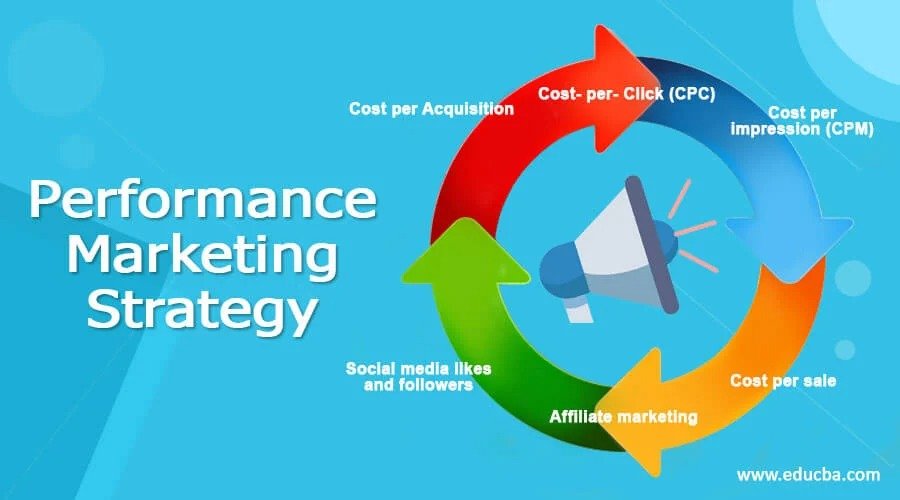
Businesses can track important performance metrics such as:
CTR (Click-Through Rate): Measures how many people click on an advertisement.
CPC (Cost Per Click): Shows how much each click costs.
CPL (Cost Per Lead): Measures the cost of generating a lead.
CPA (Cost Per Acquisition): Shows how much it costs to acquire a customer.
ROAS (Return on Ad Spend): Measures the revenue generated from advertising expenses.
How does it help?
These numbers help businesses understand campaign performance and make better marketing decisions.
6. Improves Brand Awareness
Performance marketing is not only about generating sales. It also helps businesses introduce their brands to new audiences.
Through Google Ads, Facebook Ads, and Instagram Ads, businesses can promote their products, services, and special offers to a larger audience.
How does it help?
More people become familiar with the brand, which can increase recognition, website visits, and future customer interest.
7. Helps Retarget Potential Customers
Not everyone purchases a product or service during their first visit. Some people may visit a website, check a product, or interact with an advertisement but leave without taking action.
Retargeting helps businesses reconnect with these potential customers through relevant advertisements.
For example, if someone visits an online shopping website and checks a product without purchasing it, the business can show that product again through advertisements.
How does it help?
Retargeting reminds people about the products or services they are interested in and encourages them to return and complete their purchase.
8. Supports Business Growth Through Data
Performance marketing helps businesses understand customer behaviour through campaign data and analytics.
By analysing campaign results, businesses can identify:
Which advertisements perform best
Which audience responds more
Which products attract more interest
Which platforms generate more leads
Where the advertising budget works effectively
How does it help?
Businesses can improve their marketing strategies based on real data instead of making decisions through guesswork.

Conclusion
Performance marketing is a powerful way for businesses to grow in today’s digital world. It helps businesses reach the right audience, generate quality leads, increase sales, control advertising costs, and measure campaign results.
The biggest advantage is that businesses can understand what works, improve what doesn’t, and make better marketing decisions. Whether you run a small business, startup, or established brand, performance marketing can help you achieve your business goals with the right strategy.
Remember, successful marketing is not just about spending money on advertisements. It’s about turning that investment into measurable business growth.